Contact

Critical Environment Solutions — California & Worldwide

Controlled Environments Built for Compliance.

Turnkey ESD flooring and modular cleanroom solutions designed for contamination control, operational reliability, and regulatory compliance.

ANSI/ESD S20.20USP 797/800ISO 14644California Based
FFU / HEPA
LOW WALL RETURN
RETURN AIR
MODULAR ASSEMBLY

Core Solutions


Technical systems for controlled operations.


01 —
ESD Flooring Systems

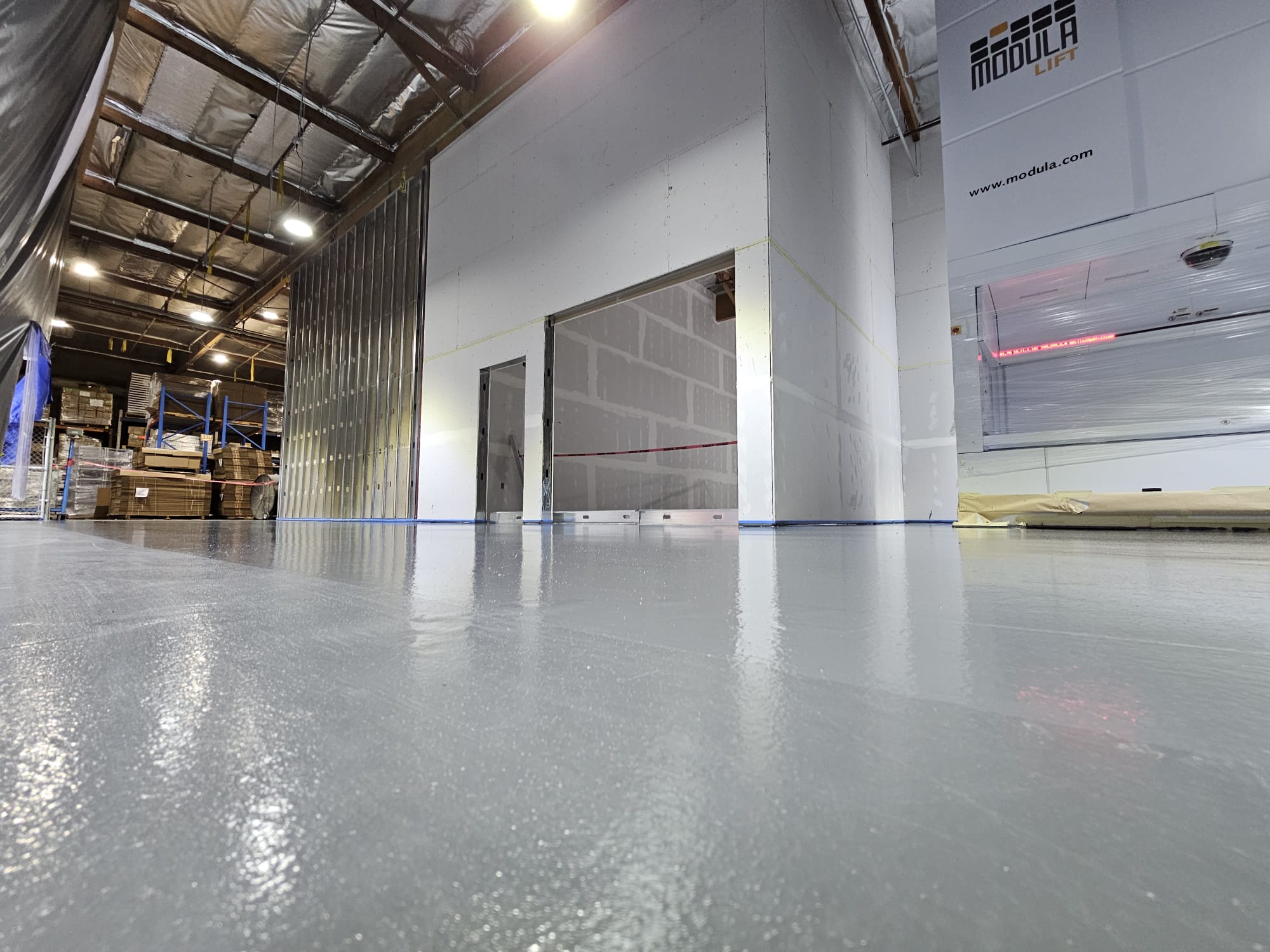
Conductive and dissipative flooring systems engineered for grounding continuity, moisture control, and sensitive operations.

Open technical page →

02 —

Modular Cleanrooms

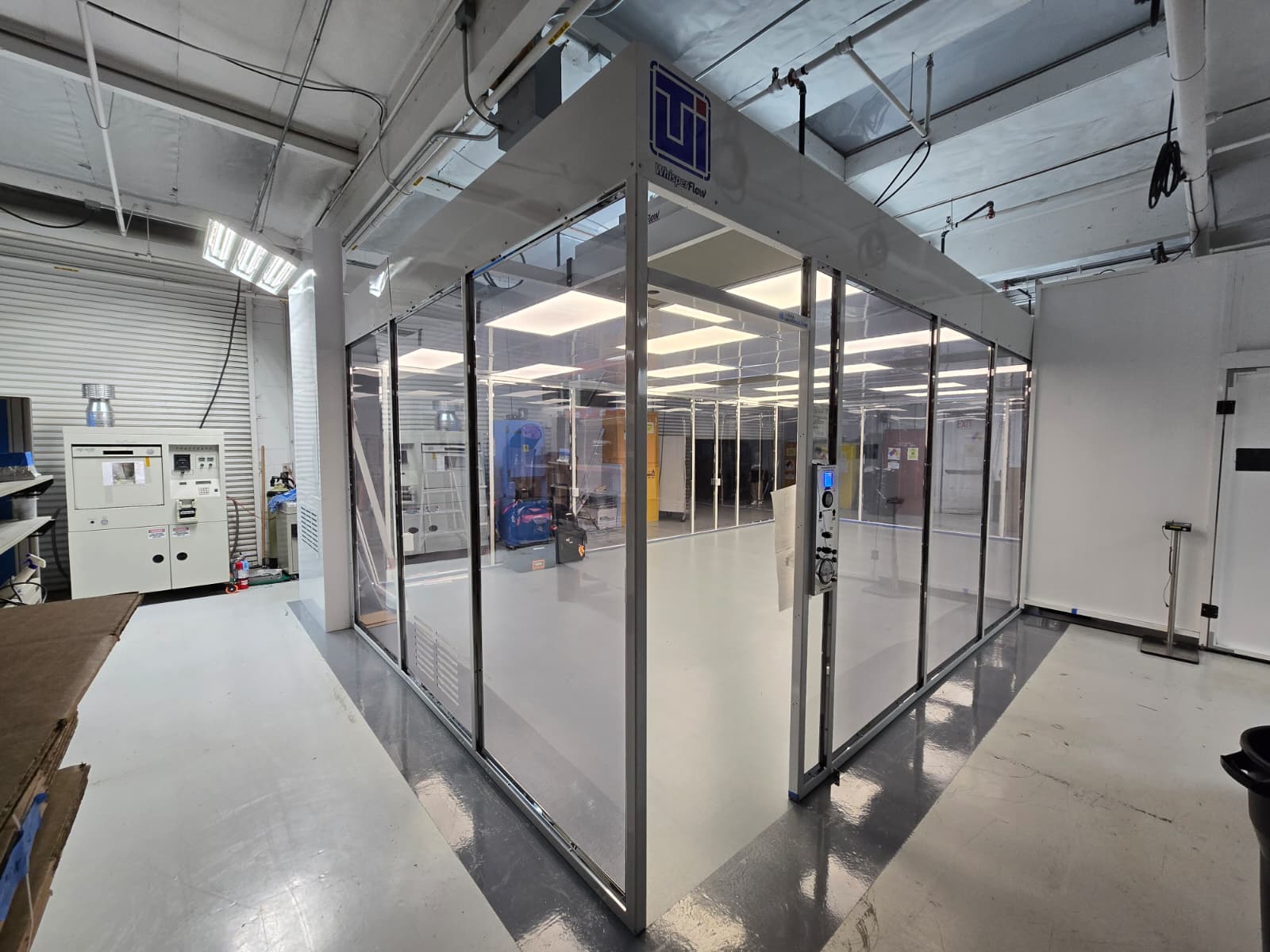
ISO-classified controlled environments with FFU integration, pressure strategy, air returns, and contamination control.

Open technical page →

03 —

Standards Compliance

Guidance around ANSI/ESD S20.20, USP 797, USP 800, ISO 14644, testing, documentation, and validation.

Open standards page →

Who We Serve


Industries that need controlled environments, ESD protection, or cleaner air.

Each industry has different risks: electrostatic discharge, particle contamination, pressure control, cleanable surfaces, garbing, documentation, and operational downtime.

Pharmaceutical

USP 797/800 rooms, ISO hierarchy, pressure control, cleaning, garbing and contamination containment.

Aerospace & Electronics

ESD floors, grounding, controlled particle levels and protection for sensitive assemblies.

Medical Device

Cleanable rooms, particle control, packaging support, gowning flow and QA documentation.

Advanced Manufacturing

Modular controlled areas that reduce dust, defects, rework and environmental variation.


Open Industries Page →

Why VIMO INOVA


Technical execution for environments where failure is expensive.

We connect installation knowledge, compliance awareness, and operational coordination to help facilities protect products, people, and processes.


Compliance-focused execution

Systems are planned around standards, audit expectations, and operational risk.

Specialized ESD knowledge

We understand resistance ranges, grounding paths, coating layers, and long-term testing needs.

Cleanroom integration mindset

We consider pressure, returns, FFUs, filtration, flooring, and cleanable finishes together.

Multi-trade coordination

Critical environments often require coordination between flooring, modular walls, mechanical, and electrical work.

FAQ


Technical questions clients usually ask.


ESD floors are commonly tested with an ESD resistance meter and weighted electrodes. The technician can measure resistance-to-ground and point-to-point resistance, often using 100V depending on range. This confirms whether the system is conductive or dissipative and whether the flooring, grounding points, and electrical path are working as a complete ESD control system.
Grinding creates the correct Concrete Surface Profile, commonly CSP 2–3 for thin-film coating systems. Without proper preparation, coatings may not bond correctly, moisture barriers can fail, and slab defects can show through the finished system. Good ESD performance starts with the slab, not only the final top coat.
Moisture vapor coming through the slab can weaken adhesion, create bubbles, discolor coatings, or damage the electrical continuity of the system. A moisture mitigation layer, often applied around 12–16 mils depending on slab conditions, helps isolate the ESD system from moisture-related failures.
Positive pressure pushes air out of the room to help prevent outside contamination from entering. Negative pressure pulls air into the room to help contain hazardous particles, vapors, or drug residue. Pharmaceutical facilities may use both depending on whether the goal is product protection, worker protection, or containment.
Common verification tools include airborne particle counters for ISO classification, manometers for room pressure differential, airflow capture hoods or balometers for supply volume, thermo-hygrometers for temperature and humidity, and smoke visualization for airflow direction. These tools help confirm that the room is not only built clean, but actually performing as designed.
Return placement affects how particles leave the work zone and how air recirculates back through HEPA-filtered FFUs or mechanical systems. Poor return placement can create dead zones, turbulence, or particle accumulation even when enough filtered air is supplied. Good cleanroom design is about airflow path, not only filter quantity.
More FFUs can increase airflow and air changes, but they do not automatically solve poor room design. If returns are badly placed, if pressure is wrong, or if turbulence is created around equipment and personnel, particles may still remain in critical areas. FFU quantity, room volume, return strategy, and pressure control need to work together.
A static discharge can damage sensitive electronic components even when the spark is invisible to people. ESD flooring works with footwear, carts, benches, grounding points, and procedures to reduce uncontrolled discharge events during assembly, testing, packaging, or repair.

Contact


Schedule Your Project Evaluation

ESD Flooring

ESD Flooring System Build-Up

Our basic system is built around substrate preparation, moisture mitigation, conductive continuity, and top-coat performance. The goal is not brand dependency; the goal is a floor system that performs under real facility conditions.

Approximate Layer Thickness

A basic thin-film ESD coating system may finish around 22–26 mils depending on the moisture barrier thickness: moisture barrier 12–16 mils, conductive layer ~5 mils, and top coat ~5 mils. Because this is still a thin system, minor dust particles, substrate texture, and slab imperfections may remain visible unless a separate self-leveling system is added.

ESD Top Coat~5 mils
Conductive Layer~5 mils
Moisture Barrier12–16 mils
Concrete / CSP 2–3 Profile
Basic system total: approximately 22–26 mils before optional self-leveling build-up.

Installation Process

The basic system is built in layers: concrete profile preparation, epoxy patching, moisture mitigation, conductive network, ESD top coat, and resistance testing. The system is explained visually so clients understand what is actually being installed.


01 Grinding

Concrete is mechanically prepared to a CSP 2–3 profile so the coating system has a stronger mechanical bond.

02 Patch

Large cracks and joints are repaired with epoxy patch material to reduce movement, voids, and coating failure points.

03 Moisture Barrier

Moisture mitigation is applied at approximately 12–16 mils when slab conditions require vapor control.

04 Conductive Layer

A conductive layer of approximately 5 mils creates the electrical network that allows static charge to move toward ground.

05 Top Coat

The final ESD top coat is approximately 5 mils and protects the system while supporting conductivity continuity.

06 Testing

Resistance-to-ground and point-to-point testing help confirm that the installed surface is performing within the expected range.

Visual ESD system map

This diagram connects the coating layers to the actual ESD function: people, footwear, carts and equipment generate charge; the top coat and conductive layer guide charge across the floor; grounding points complete the controlled path.

  • Top coat: contact surface for personnel, carts and operations.
  • Conductive layer: electrical network below the wear surface.
  • Moisture barrier: protects adhesion and system stability.
  • Grounding point: gives charge a defined path instead of a random discharge.
Personnel / Footwear
ESD top coat ~5 mils
Conductive layer + moisture control
Grounding point
Basic build-up: moisture barrier 12–16 mils + conductive layer ~5 mils + top coat ~5 mils = approximately 22–26 mils

Basic thin-film ESD system

More economical and common for ESD coating systems. Because the build-up is thin, slab texture, dust particles or small imperfections may remain visible.

Optional self-leveling build-up

Higher build depth can create a smoother visual finish, but it is a separate system decision based on budget, slab condition and operational requirements.

Static charges need a controlled path to ground.

Static electricity can build up on personnel, footwear, carts, benches, equipment, and work areas. An ESD flooring system helps transfer that charge into a controlled conductive network instead of allowing an uncontrolled discharge near sensitive components.

  • Personnel and footwear generate charge during movement.
  • The conductive floor network provides a controlled path.
  • Grounding points complete the system.
  • Testing confirms electrical continuity.
Personnel / Footwear
Conductive ESD Layer
Sensitive Equipment
Grounding Point

The visual shows charge movement from people and work areas through the ESD floor system toward ground, reducing uncontrolled discharge risk.


Request an Evaluation

Modular Cleanrooms

Airflow, Pressure, FFUs & Returns

Cleanroom performance depends on filtered supply air, pressure strategy, return placement, particle control, room hierarchy, and verification. A room can look clean but still fail if airflow direction, returns, or pressure are wrong.

How Cleanroom Air Recirculates

Clean air is supplied through FFUs or HEPA modules, moves down through the work zone, pushes particles toward return grilles, then recirculates back through filtration. The repeated cycle helps reduce particle concentration and keeps the room closer to the required ISO class.


WORK ZONE
FFU / HEPA Filtered Supply
Clean Downflow
Low Wall Returns
Recirculated Air Path

Supply Air

FFUs deliver filtered air into the clean zone through HEPA or ULPA media depending on room requirements.

Particle Capture

Airflow carries particles away from the critical work zone so they can return to filtration instead of settling.

Returns

Low wall or side returns help guide air movement and reduce dead zones when the layout is designed correctly.

Positive vs Negative Pressure

Pressure strategy decides which direction air moves when doors open, seams leak, or people move between spaces. Positive pressure protects the room from outside contamination. Negative pressure contains hazardous contaminants inside the room.


Positive Pressure

AIR PUSHES OUT
PRODUCT PROTECTION

Used when the goal is to keep outside particles from entering the controlled space.

  • Used in sterile compounding, electronics, medical devices, and clean manufacturing.
  • Protects product, process, and sensitive components.

Negative Pressure

AIR PULLS IN
HAZARD CONTAINMENT

Used when the goal is to prevent hazardous residue, vapors, or particles from escaping.

  • Used for USP 800 hazardous drug handling and containment environments.
  • Protects workers, adjacent rooms, and the surrounding facility.

Request an Evaluation

Industries We Serve

Why controlled environments matter by industry

ESD flooring and cleanrooms are not cosmetic upgrades. They help protect electronics, sterile processes, hazardous drug handling, product quality, documentation requirements, and production reliability.

Pharmaceutical facilities need controlled environments because product safety depends on particle control, pressure strategy, cleaning, garbing, air changes, and proper separation between clean and hazardous work areas.

Cleanroom need

ISO 5 PECs, ISO 7 buffer rooms, ISO 8 ante rooms, HEPA filtration and airflow verification.

Pressure need

Positive pressure for sterile protection; negative pressure for USP 800 hazardous drug containment.

Flooring need

Cleanable, durable surfaces that tolerate cleaning protocols and reduce contamination traps.

Electronics and aerospace assemblies can fail from invisible static discharge, airborne particles, poor grounding, or contamination introduced by people, carts, clothing and tools.

ESD need

Conductive or dissipative flooring, footwear, carts, benches and grounding paths that reduce uncontrolled discharge.

Air need

Filtered airflow reduces particles that can affect sensors, assemblies, optics, boards and precision components.

Audit need

Resistance testing, documentation and maintenance help support internal quality systems and customer audits.

Medical device work often requires cleaner assembly, packaging, labeling or inspection areas where dust, fibers, human traffic and uncontrolled airflow can create quality issues.

Room need

Modular cleanrooms can create controlled areas without rebuilding the entire facility.

Process need

Gowning flow, cleaning surfaces and air movement reduce particle transfer to products and packaging.

Flooring need

Seamless or low-maintenance floors support cleaning and can be paired with ESD control when electronics are present.

Industrial facilities may not always need a high ISO class, but they still benefit from controlled dust, defined workflows, protected equipment, and cleaner production zones.

Modular need

Modular rooms can isolate sensitive steps, inspection areas, R&D zones, or equipment from the larger warehouse.

ESD need

Facilities with electronic controls, sensors, robotics, boards or test benches may require static-control flooring.

Quality need

Cleaner air and controlled surfaces help reduce rework, defects, downtime and environmental variation.

A facility does not need to be pharmaceutical to require control.

Any operation involving sensitive electronics, particles, sterile work, hazardous materials, clean packaging, precision assemblies or audit documentation may require some level of ESD control, cleanroom support or controlled environment strategy.

Request an Evaluation

Standards Compliance

Critical Environment Standards

Standards help define how floors, rooms, airflow, pressure, and particle control should be measured, documented, and maintained.

ANSI/ESD S20.20

ESD control program standard used to protect sensitive electronics through grounding, personnel controls, flooring, worksurfaces, and testing.

USP 797

Focuses on sterile compounding environments, cleanroom hierarchy, ISO-classified spaces, cleaning, garbing, and contamination control.

USP 800

Focuses on hazardous drug handling, containment, negative pressure, exhaust strategy, and worker/environmental protection.

ISO 14644

Defines cleanroom classifications based on airborne particle concentration measured by particle counters at specified particle sizes.

Common Verification Tools


ESD Resistance Meter

Measures point-to-point and resistance-to-ground values using electrodes to verify ESD floor performance.

Particle Counter

Measures airborne particle concentration at defined particle sizes to verify ISO classification.

Manometer

Measures pressure differential between rooms to confirm positive or negative pressure strategy.

Airflow Hood

Measures supply volume from FFUs, HEPA modules, or diffusers to confirm delivered airflow.


Request an Evaluation